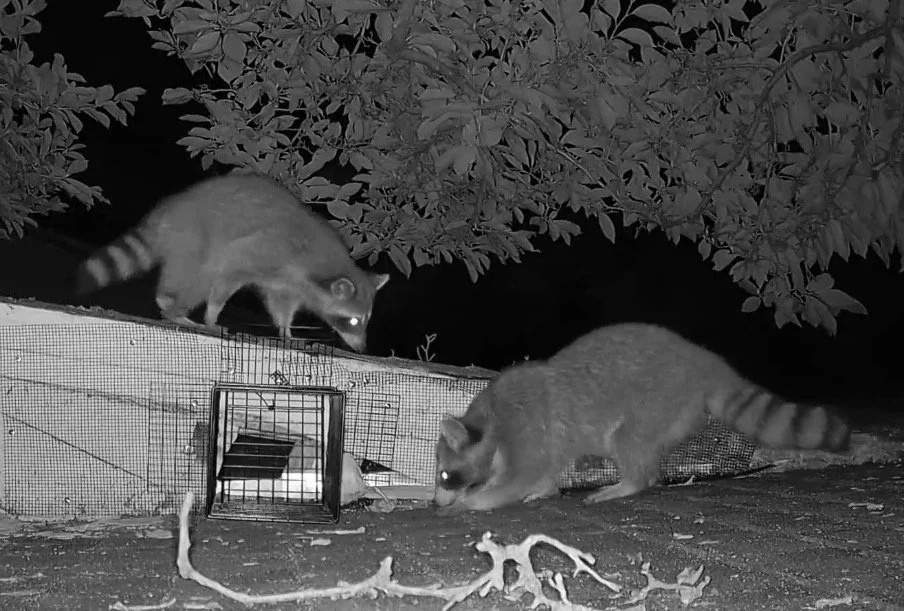
Raccoons are pretty good at finding their way into places they shouldn’t be.
On this job, the homeowners were hearing activity around the home and had raccoons using an entry point to get inside. The first step wasn’t just putting up a trap and hoping for the best. We needed to figure out exactly where they were getting in and how they were using the entry point.
Once we located the main entry point, we installed a one-way door.
The idea behind a one-way door is pretty simple: the raccoon can leave, but it can’t get back inside. We initially leave the door open so the animal can get comfortable using the opening. Once we know it’s using the door, we set it so the raccoon can push its way out but can’t push its way back in.
The door stays in place while we make sure the animals are out. After we’re confident there is no longer any activity, we can remove the door and permanently repair the opening.
I really like this approach because we’re not just trying to catch a raccoon. We’re solving the actual problem — getting the animal out and then making sure it can’t use the same opening to come back.
Every house is a little different, so the right solution depends on where the animals are getting in, how many animals are involved, and what kind of damage has already been done.
That’s the kind of work we do at Nature-Nix: wildlife removal, exclusion, and the repairs needed to keep the problem from coming back.